
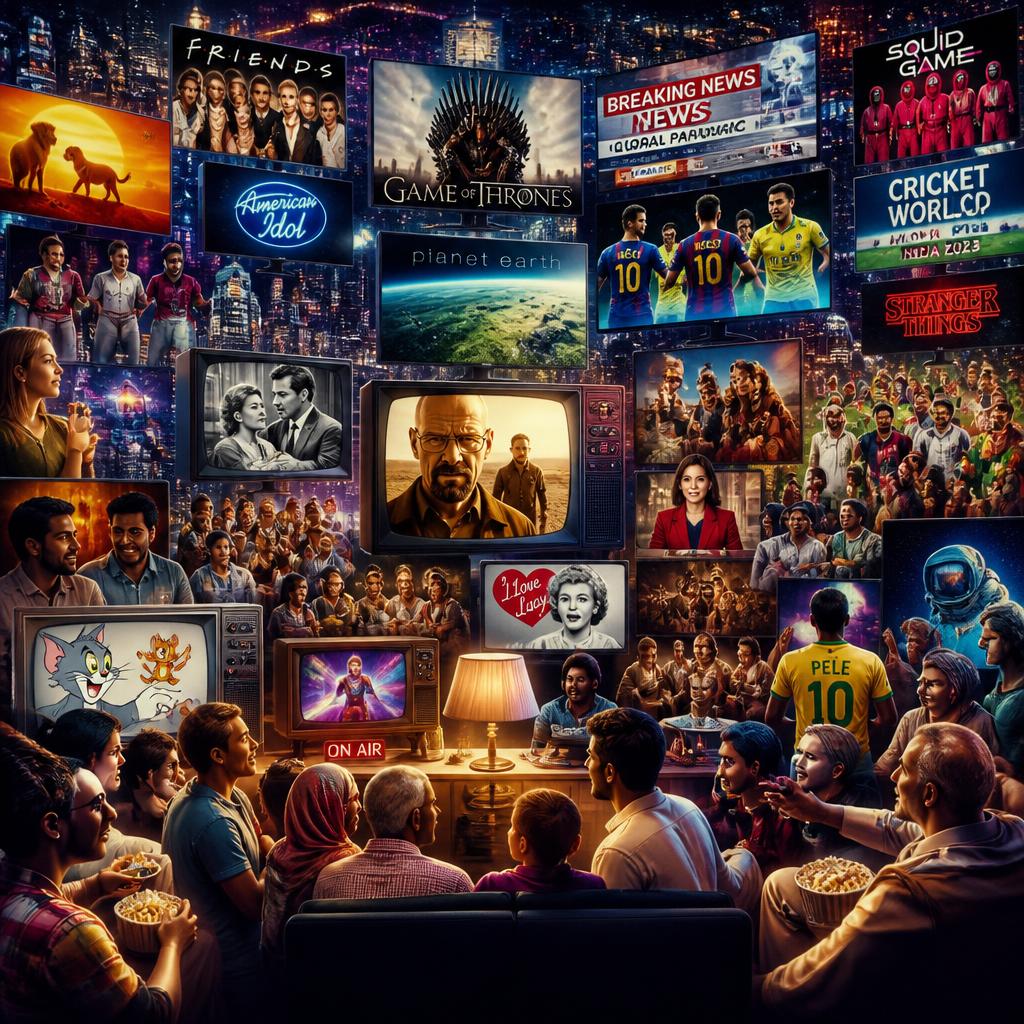
Television has been one of the most influential inventions in modern entertainment history. Since its rise in the 20th century, it has transformed how people consume stories, news, and culture. Unlike cinema, which often focuses on standalone experiences, television offers continuous storytelling that unfolds over time, allowing audiences to develop deep connections with characters and narratives.
Today, television continues to evolve through traditional broadcasting, cable networks, and digital streaming platforms. It remains a dominant force in global entertainment, shaping popular culture and redefining how stories are told and experienced.
The Origins of Television
The development of television began as an ambitious attempt to transmit moving images and sound across distances. Early experimental broadcasts were limited in quality and reach, but they marked the beginning of a revolutionary medium.
By the mid-20th century, television became widely accessible to households around the world. Families gathered around TV sets to watch news, entertainment programs, dramas, and live broadcasts. This shared experience quickly made television an essential part of daily life.
As technology advanced, television transitioned from black-and-white broadcasts to color programming, and eventually to high-definition digital formats. Each stage of development expanded the possibilities of visual storytelling.
Television as a Storytelling Medium
Television is unique because it allows stories to develop gradually over time.
Unlike films that are typically completed in a single viewing session, television series unfold across episodes and seasons. This structure gives writers and creators the opportunity to build complex characters, layered narratives, and long-term story arcs.
Audiences become emotionally invested in characters over extended periods, often following their journeys for years. This long-form storytelling creates a strong sense of attachment and anticipation.
The Rise of Television Genres
Television has developed a wide variety of genres that appeal to different audiences:
- Drama series explore emotional relationships, moral conflicts, and personal struggles.
- Comedy shows provide humor and lighthearted entertainment.
- Crime and mystery series focus on investigations and suspenseful storytelling.
- Science fiction and fantasy introduce imaginative worlds and futuristic concepts.
- Reality television presents unscripted or semi-scripted real-life situations.
- Documentary series educate viewers about real events, history, and culture.
Each genre contributes to the diversity and richness of television programming.
Character Development in TV Series
One of television’s greatest strengths is long-term character development.
Because stories unfold over multiple episodes, characters have time to grow, evolve, and face complex challenges. Writers can explore detailed emotional arcs, making characters feel more realistic and relatable.
Audiences often form strong emotional bonds with television characters, sometimes even more deeply than with film characters, due to the extended time spent with them.
The Role of Writers and Showrunners
Television writing is a collaborative process led by writers and showrunners.
Showrunners are responsible for overseeing the creative direction of a series, ensuring consistency in storytelling, tone, and character development. Writers work together in teams to develop scripts for individual episodes while maintaining the overall narrative structure.
This collaborative approach allows television series to maintain both creativity and continuity across multiple seasons.
Acting in Television
Television acting requires versatility and consistency.
Actors must maintain their character development across long periods of production, often returning to roles over several years. They must adapt to evolving scripts while preserving emotional continuity.
Strong television performances help bring depth and realism to long-running narratives, making characters memorable and impactful.
The Impact of Television on Culture
Television has played a major role in shaping global culture.
It influences fashion, language, politics, and social behavior. Iconic television shows often become cultural milestones, sparking discussions and shaping public opinion.
News broadcasts and documentaries also play a critical role in informing society and increasing awareness of global events.
The Golden Age of Television
Many critics refer to recent decades as the “Golden Age of Television.”
This period is characterized by high-quality storytelling, complex characters, and cinematic production values. Television series now often rival or even surpass films in terms of narrative depth and artistic ambition.
Streaming platforms have contributed significantly to this evolution by allowing creators greater freedom and audiences more choice.
Streaming and the Digital Revolution
The rise of streaming platforms has completely transformed television consumption.
Viewers now have access to entire series on demand, enabling binge-watching and non-linear viewing experiences. This shift has changed how stories are written, with many series designed specifically for streaming audiences.
Traditional broadcast television still exists, but digital platforms have become the dominant force in modern entertainment.
Television Production Process
Creating a television series involves multiple stages:
- Concept development and writing
- Casting and pre-production planning
- Filming and direction
- Post-production editing and sound design
- Distribution through networks or streaming platforms
Each stage requires collaboration between writers, directors, producers, actors, and technical teams.
The Importance of Episodic Structure
Television relies heavily on episodic storytelling.
Each episode may contain a self-contained story while contributing to a larger narrative arc. This structure allows flexibility in storytelling and keeps audiences engaged over long periods.
Cliffhangers, plot twists, and seasonal finales are commonly used to maintain viewer interest.
Television and Social Reflection
Television often reflects real-world issues and societal changes.
Many series explore topics such as inequality, politics, family dynamics, mental health, and cultural identity. By presenting these themes in narrative form, television encourages public discussion and awareness.
Documentaries and news programs also provide critical insight into global events.
Globalization of Television
Television has become a global medium.
International series are now widely available through streaming services, allowing audiences to experience stories from different cultures. This globalization has expanded creative diversity and introduced viewers to new storytelling traditions.
Foreign-language series have gained massive international popularity, demonstrating the universal appeal of strong narratives.
The Future of Television
The future of television is closely tied to technology and audience behavior.
Interactive storytelling, artificial intelligence, and immersive viewing experiences may redefine how television content is created and consumed. Virtual reality and personalized content could also play a role in future developments.
Despite these innovations, storytelling will remain at the core of television’s identity.
Conclusion
Television continues to be one of the most powerful storytelling mediums in the world. It combines accessibility, emotional depth, and long-form narrative structure to create meaningful connections with audiences.
From its early broadcast days to today’s streaming era, television has continuously evolved while maintaining its central purpose: to tell stories that inform, entertain, and inspire.
As technology advances and new platforms emerge, television will continue to adapt, shaping the future of global entertainment for generations to come.